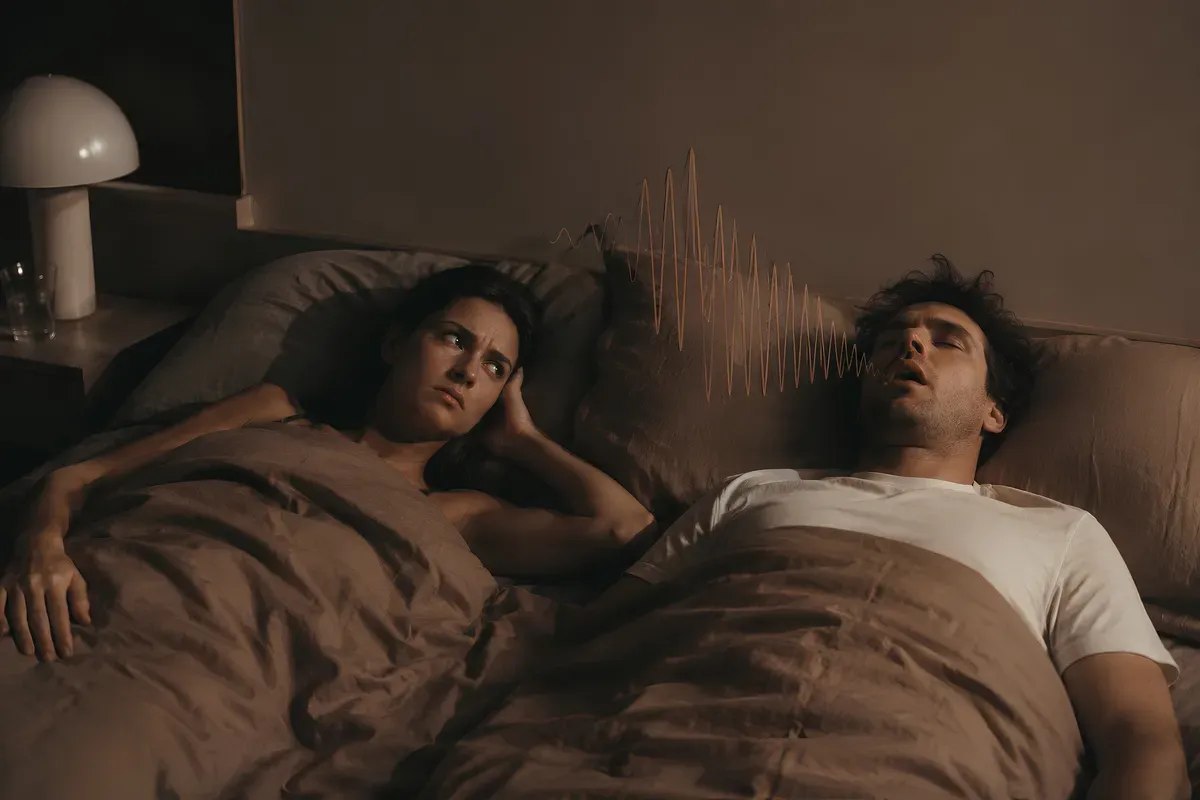
They fall asleep in four minutes. They sleep straight through. They wake up cheerful and ask how you slept.
You’ve been awake since something like 2 a.m., lying rigid, listening to the pattern and bracing for the next one. And there’s a second thing on top of the tiredness, which is how much resentment you feel toward a person who is, technically, asleep and not doing anything on purpose.
This is a common sleep problem, and one of the least discussed, because it feels less like a sleep issue and more like a complaint about someone you love.
Why It Wrecks Your Night More Than It Seems Like It Should
The snoring itself isn’t really the problem. The problem is the shape of it.
Sound doesn’t have to wake you up to cost you sleep. It can lift you briefly into a lighter stage without ever bringing you fully awake, and you won’t remember it happening. What you’ll have instead is a night that looked like a full night and didn’t work like one. This is why you can be told “you slept for eight hours” and know, absolutely, that you didn’t.
And snoring is close to the worst possible kind of noise for this. It’s irregular. It stops, and you start to relax, and then it starts again. Steady sound fades into the background. Sound that keeps changing keeps catching your attention, because change is what registers.
Then there’s the anticipation. Once you’ve been woken a few times, you start listening for it. Now you’re not just being disturbed, you’re on guard, waiting. That state is fundamentally incompatible with falling asleep, and it’s often doing more damage than the sound.
What Actually Helps
Work outward: what you control, then the shared space, then the conversation.
Get to sleep first. Modest, and more effective than it sounds. It’s much easier to stay asleep through noise than to fall asleep through it. If your bedtimes are close, going up twenty or thirty minutes earlier can be the whole fix.
Flatten the spikes rather than blocking the sound. A fan, or any steady low-level sound, doesn’t cover snoring, but it reduces the contrast between silence and noise. Less contrast means fewer of those small jolts back toward waking. This is usually more effective than trying to make the room silent, which is not achievable anyway.
Earplugs, if you need them. Foam or wax, whatever’s comfortable enough that you’ll actually keep them in. A common worry is missing an alarm or a child. Foam and wax reduce sound rather than eliminate it, so a close alarm is usually still audible. Worth a few nights’ trial before dismissing.
Change their position, not their behavior. Snoring is generally worse on the back. A gentle nudge onto their side often stops it for a while. Some couples make this a standing arrangement so it doesn’t have to be renegotiated at 3 a.m. every time.
Look at the evening, not the night. Alcohol close to bedtime tends to make snoring louder, and so does congestion. Neither is a cure, but both are worth noticing if the bad nights cluster.
Consider separate rooms without treating it as a failure. This one carries a lot of unnecessary shame. Plenty of couples who like each other very much sleep better apart, some nights or every night, and are warmer for it in the daytime because neither one is running on empty. It’s a scheduling decision, not a verdict on the relationship.
The Conversation Part
The hard bit usually isn’t the tactics, it’s raising it.
It lands better as a problem you have than a flaw they have. “I’m not sleeping and I’m struggling” gets a different response than “you snore.” The first is true and invites help. The second sounds like an accusation about something they cannot control, and it tends to make people defensive rather than cooperative.
It also helps to say it during the day. Nothing productive has ever been negotiated at 3 a.m. by someone who has been awake for two hours.
When It’s Worth Involving a Doctor
This part matters, so plainly:
If the snoring is loud and habitual, and especially if you’ve noticed them gasping, choking, or seeming to stop breathing for stretches, that’s worth raising with a doctor. Same if they’re persistently sleepy during the day despite spending enough time in bed, or if they wake with headaches.
Those patterns can point to a breathing problem during sleep, which is a medical matter rather than a bedroom-logistics one, and it’s the kind of thing worth getting properly looked at rather than working around. You’re not being dramatic by suggesting it. Snoring is the noticeable sign of something that’s often easier to sort out than people expect.
If You Take One Thing
You’re not being petty, and it isn’t in your head. Fragmented sleep is real sleep loss even when you don’t remember waking, and being the one who’s awake next to someone who isn’t is genuinely hard.
Start tonight with the two that cost nothing: get to sleep first, and add steady background sound. Then have the conversation in daylight.


