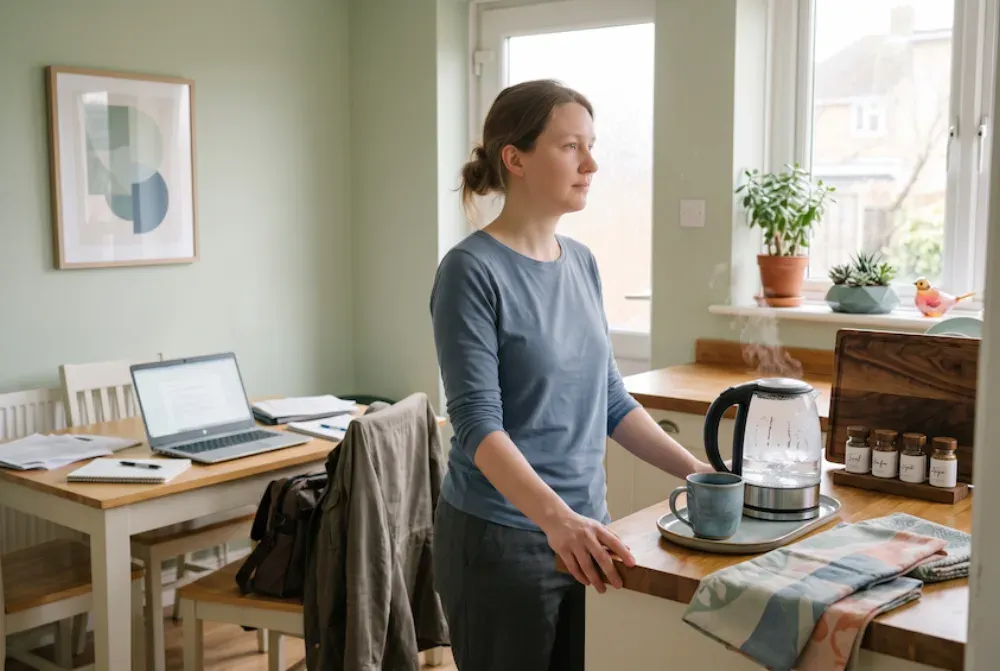
You are good at things. You apply effort, you get results, and that has worked for most of your life.
So when sleep gets difficult, you do the obvious thing. You take it seriously. You research it, optimize the room, set a schedule, and concentrate on falling asleep with the same focus you’d bring to anything else that mattered.
And it gets worse. Reliably, frustratingly worse, in a way that makes no sense given how much effort you’re putting in.
There’s a reason for that, and it’s not a motivational one. Sleep belongs to a small category of things that effort actively damages.
Some Things Can’t Be Done on Purpose
Try to blush deliberately. Try to make yourself find something funny. Try to forget a phone number.
You can’t, and not because you’re not trying hard enough. These things happen when conditions allow, and the attempt itself is one of the conditions that prevents them. The wanting gets in the way of the having.
Sleep is in that category. Falling asleep is not an action you perform. It’s what happens when nothing is stopping it.
Which means the entire model you’re bringing to it, identify goal, apply effort, achieve outcome, is the wrong model. Not insufficiently applied. Wrong.
What Effort Actually Does at Bedtime
Three things, and they compound.
Trying is a task, and tasks require alertness. To try to fall asleep you have to hold the goal in mind and check your progress against it. That’s active cognition, and active cognition is the opposite of what sleep needs. You cannot concentrate your way into unconsciousness.
Monitoring keeps you at the surface. “Am I drifting yet?” is a question you have to be awake to ask. Every check is a small pull back toward wakefulness, and the closer you get to sleep the more likely you are to check, because you notice yourself getting close. People routinely wake themselves at the exact moment they were dropping off, and this is how.
Stakes create arousal. If tonight matters, if there’s a presentation tomorrow, then not sleeping is a threat. Your body responds to threats by increasing alertness. So the more important the night, the more your own system works against you. That’s why the night before something significant is so predictably bad.
Put together: the harder you try, the more awake you make yourself, which increases the stakes, which makes you try harder. It’s a loop that tightens.
Why It Escalates Over Weeks
A few bad nights is ordinary. What turns it into a pattern is what the effort does to your relationship with the bed.
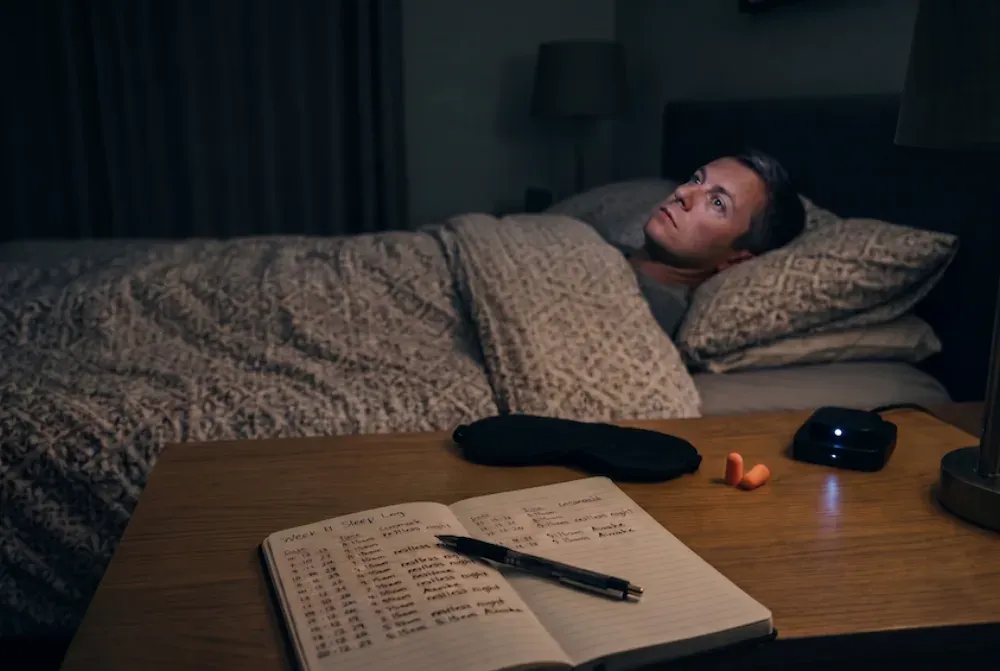
Every night you lie there working at it, you’re practicing something: being awake, alert, and frustrated in that bed. Repeat it enough and the bed itself starts to prompt alertness. People describe feeling drowsy on the sofa and wide awake the moment they lie down, and that isn’t imagination.
At that point the original cause has usually gone. The deadline passed. The stressful thing resolved. But the pattern runs on its own, maintained by the effort you’re applying to fix it.
This is the thing worth understanding: at a certain stage, your trying is the problem rather than the solution.
What to Do Instead, Which Is Not “Just Relax”
“Relax” is another instruction you can’t follow on purpose. Here’s what can actually be done.
Change the target to something you can’t fail at. Not “fall asleep” but “lie here, warm, in the dark, resting.” That’s achievable by definition. It sounds like a semantic trick and it isn’t: the target is what generates the monitoring, so changing the target removes the monitoring.
Let resting count. Lying still with your eyes closed, not asleep, is genuinely restorative. It is not the same as sleep and it is a very long way from lying there failing. Believing that changes how the hour feels, and how the hour feels is most of the problem.
Get up when you’re clearly not sleeping. Counterintuitive if you’re effort-minded, because it looks like giving up. It’s the opposite: staying in bed awake is what trains the bed as a place for being awake. Get up, keep the lights low, do something dull, come back drowsy.
Stop measuring. No clock, no sleep score in the morning, no mental tally of how many hours you got. Measurement is monitoring with a spreadsheet attached, and it feeds the same loop.
Put the effort somewhere it works. This is the part that suits you. Effort is genuinely useful on the things that are under your control: a consistent wake time, light in the morning, a cool room, caffeine timing, an earlier slot for processing the day. Those all respond to discipline. Bedtime itself doesn’t. Spend the effort upstream and leave the night alone.
The Reframe
You’re not failing at sleep. You’re succeeding at trying, and trying is the wrong tool.
The skill here isn’t effort, it’s allowing, and allowing is genuinely harder for people who are good at effort. Doing nothing on purpose is its own difficulty, and it’s worth knowing that’s a real thing rather than a personal shortcoming.
When to Get Some Help
If this has been going on for weeks, if the bed itself has started to feel like the problem, or if you’re dreading the evening, that’s worth raising with a doctor rather than working on alone.
That specific pattern, where the effort and the anxiety are maintaining the wakefulness, is well recognized, and the standard first-line approach for it is not medication. It’s a structured, practical, time-limited program that changes how and when you use your bed, delivered by someone trained in it. It’s designed for exactly this, and it works better the earlier it’s started.
Also worth mentioning if low mood or persistent anxiety is part of the picture, or if daytime tiredness is affecting how you function.
If You Take One Thing
Sleep is not a performance and it does not reward effort. It’s closer to a door that only opens when you stop pushing on it.
Aim at resting instead of sleeping, let the resting count, and spend your considerable capacity for effort on the daytime things that actually respond to it.