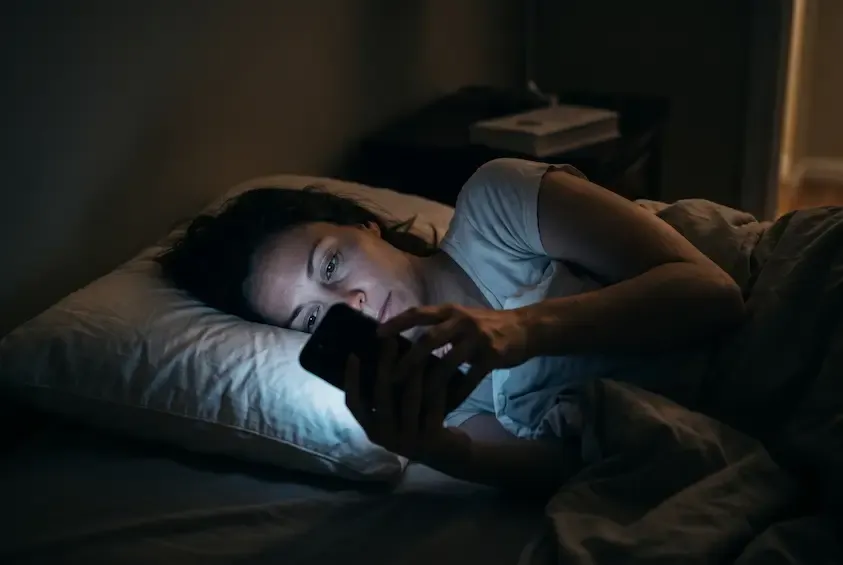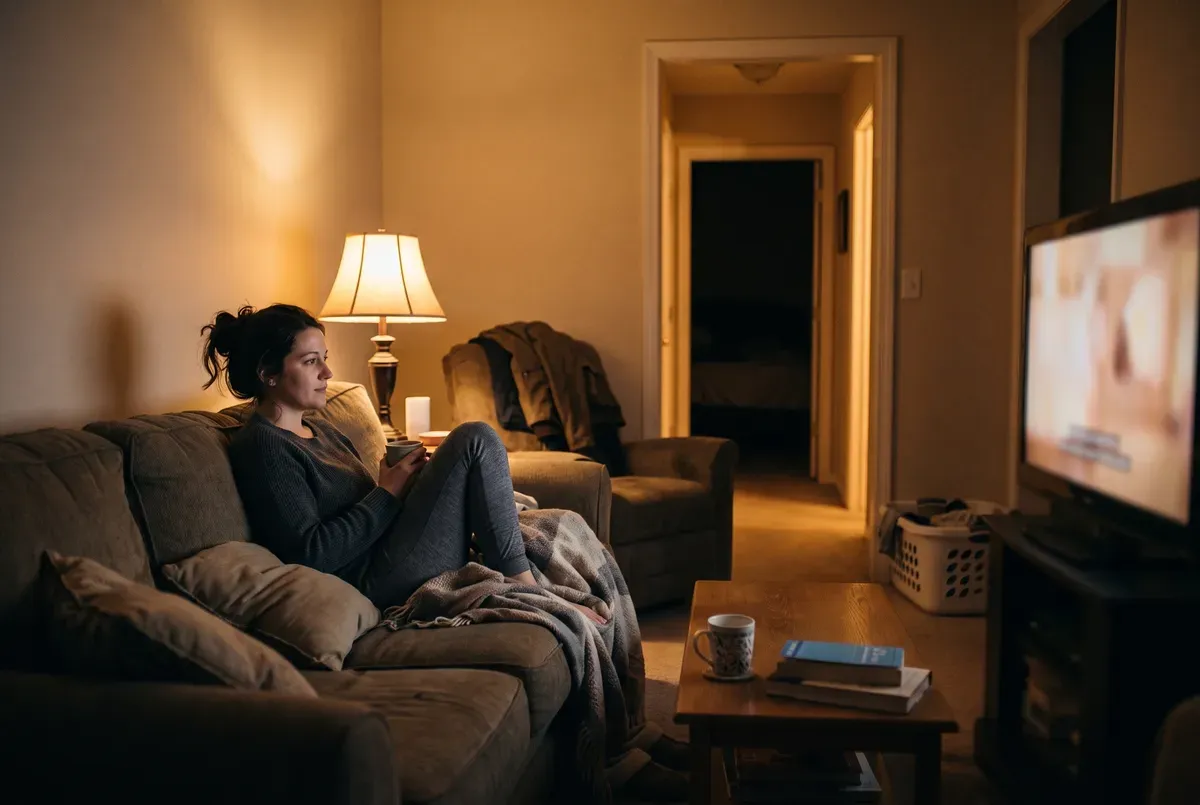
It’s twenty past midnight. You have to be up at six. You have been tired since about four in the afternoon.
And you are sitting on the sofa, fully aware of all of this, not going to bed.
Not because you’re doing anything. You’re not finishing work or dealing with a crisis. You’re watching something you’re not enjoying much, or scrolling something you’ve already seen, actively choosing to be awake while simultaneously thinking that you should go to bed.
Then you do, eventually, and lie there briefly furious with yourself.
This has a name, and understanding it helps more than the willpower approach has been helping.
It Isn’t a Sleep Problem
That’s the first thing worth getting straight, because it changes what you do about it.
You’re not lying awake. You’re not struggling to drop off. Your sleep, when you finally allow it, is probably fine. The problem happens entirely before bed, and it’s a decision rather than a difficulty.
Which is why sleep advice bounces off it. A better wind-down routine doesn’t help someone who isn’t trying to wind down. Blackout curtains don’t help someone standing in the kitchen at half twelve deciding to make a tea.
What’s Actually Happening
The pattern is sometimes called revenge bedtime procrastination, which is a clumsy phrase that names something real.
Here’s the shape of it. You spend the day meeting obligations. Work, children, commitments, admin, other people’s needs. Very little of it is yours. And by the end of it, the only stretch of time nobody has a claim on is the stretch after everything is finished, which is exactly when you should be asleep.
So you take it. Not because you don’t value sleep, but because the alternative is a day with no part of it belonging to you, and that feels intolerable in a way that isn’t irrational.
That’s why it responds so poorly to being told to go to bed earlier. Going to bed earlier means giving up the only unclaimed time you have. You’re not choosing between rest and entertainment. You’re choosing between rest and autonomy, and autonomy is a real need rather than a weakness.
Three things make it worse:
You’re too depleted to choose well. Deciding to stop requires exactly the kind of self-direction you’ve spent all day using up.
The formats have no ending. Autoplay, feeds, one more level. Nothing stops on its own, so stopping has to be an act of will at the hour you have least of it.
It doesn’t feel like a decision. It feels like drifting, which means the moment to intervene passes without being noticed.
What Doesn’t Work
Trying harder. If discipline were going to solve this, it would have by now. The pattern isn’t caused by not knowing you should sleep.
Going to bed straight after the last task. This removes the unclaimed time entirely, which is the thing you were protecting. It works for about three nights.
Framing it as a character flaw. The guilt is usually there already, and it makes the evening less restorative without making bedtime any earlier.
What Actually Helps
The move is not to eliminate the time. It’s to get it somewhere it costs you less.
Take the time earlier and deliberately. This is the whole intervention in one line. If the need is for a stretch that belongs to you, the question is where else it could go. Twenty minutes before you start the evening’s obligations. A protected half hour after work before anything else begins. A lunch break that’s actually a break. The need is legitimate; the timing is what’s expensive.
Make the evening thing end by itself. Turn off autoplay. Pick the episode, the chapter, the match, before you start. This is the single most practical change available, because it converts a decision you have to make at midnight into one you made at nine.
Decide the stop time when you’re capable of deciding. Early evening, not late. Set an alarm for it if that helps, and treat it as the start of the wind-down rather than a bedtime.
Give the last stretch to something you actually want. A lot of bedtime procrastination is spent on things nobody enjoys. Twenty minutes of something genuinely good is more restorative than ninety of half-watching, and it’s easier to stop, because it finished.
Get the phone out of the sequence. It’s the most effective machine ever built for making an hour disappear without a stopping point.
Move one obligation out of the evening. If the reason you have no time until midnight is that the day is genuinely full, that’s an arithmetic problem, and no amount of evening discipline solves it. Something has to move.
The Reframe Worth Having
You’re not failing to prioritize sleep. You’re prioritizing something else that also matters, at the only hour it seems to be available.
Which means the useful question isn’t “why won’t I go to bed.” It’s “where else in my day could I get twenty minutes that belong to me?” Answer that and the midnight version usually loosens on its own, because it was doing a job that’s now being done somewhere cheaper.
When It’s Worth Talking to Someone
Putting off bedtime is common and usually about how the day is structured rather than about you.
But if it’s paired with dreading the next day, with a persistent low mood, or with a sense that nothing in the day is yours no matter how you arrange it, that’s worth raising with a doctor. Feeling that the only tolerable part of the day is the part where nothing is asked of you can be a sign of being stretched past what’s sustainable, and that’s worth taking seriously rather than scheduling around.
Same if daytime tiredness is affecting how you drive, work, or care for people.
If You Take One Thing
You’re not choosing screens over sleep. You’re choosing an hour that belongs to you over an hour that doesn’t, and at midnight that’s the only one on offer.
Find that hour somewhere earlier in the day, and give the evening thing an ending built in. Those two changes do more than any amount of resolving to go to bed on time.