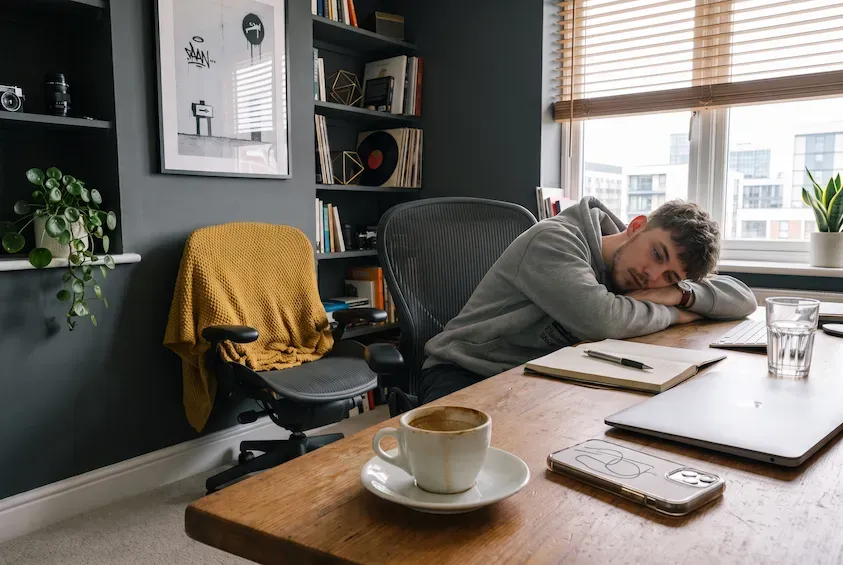
You had the evening free. You did nothing with it, deliberately, because you were exhausted. Sofa, phone, something on in the background.
And at the end of it you felt roughly the same as when you started. Maybe slightly worse, and now also annoyed about the wasted evening.
This is one of the more frustrating patterns in modern life: resting and not feeling rested. It usually isn’t that you rested too little. It’s that the kind of rest you chose didn’t match the kind of tired you were.
Two Kinds of Rest
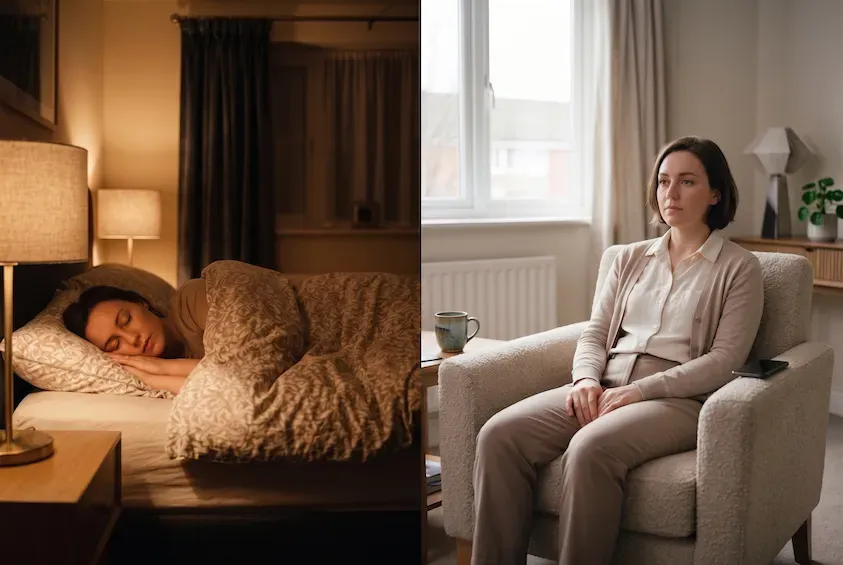
Passive rest is the absence of demand. Lying down, sitting still, sleeping, doing nothing. Your body and mind are asked for as little as possible.
Active rest is low-demand engagement. A walk without a destination. Cooking something you know how to cook. Gardening, a slow swim, a craft you don’t have to be good at. You’re doing something, but nothing is riding on it.
Both are legitimately restful. They restore different things, which is why picking the wrong one leaves you flat.
The Rule That Makes This Useful
Rest in the opposite direction from what drained you.
If your day was mentally exhausting, sitting motionless in a quiet room often doesn’t help much. Your mind is still spinning and you’ve now given it nothing to do but spin. What tends to work better is gentle physical or sensory engagement: moving your body, using your hands, being somewhere with different scenery. It occupies the part of you that’s still running, without asking it to solve anything.
If your day was physically demanding, the reverse. Your body needs the absence of demand, and passive rest is exactly right.
If your day was socially demanding, meaning hours of being attentive and responsive to other people, the restorative thing is usually solitude, whether it’s active or passive. And if your day was isolating, easy company can be more restful than more time alone.
It’s easy to default to one mode regardless of the day. The overachiever’s default is usually passive collapse, because it feels like the maximum available rest. For a mentally exhausting day, it’s frequently the least effective option.
Where Scrolling Fits, Which Is Nowhere
Worth naming directly, because it’s what most “rest” actually consists of.
Scrolling isn’t passive rest, because your mind is being fed a constant stream of small demands, judgments, and reactions. And it isn’t active rest, because your body isn’t engaged and nothing is being made or moved.
It’s low-effort stimulation, which is a third category, and it’s the one that most reliably produces the “I rested and feel no better” outcome. It passes time without restoring much of anything.
This isn’t a moral point. It’s a practical one: if you’re choosing rest deliberately, it’s worth knowing that this particular option tends not to deliver.
Why the Overachiever Version Is Harder
If your instinct is to earn rest, two things get in the way.
Rest gets deferred until you’re depleted. By then you’re too tired to choose well, so you default to collapse. Collapse works for physical exhaustion. It works poorly for the mental kind, which is usually what you have.
Active rest doesn’t feel like rest, because you’re doing something, and doing something feels like it should count as work. So it gets skipped in favor of lying down, which feels more like proper rest and often restores less.
The reframe worth trying: rest isn’t measured by how little you did. It’s measured by how you feel afterward.
How to Pick, in About Ten Seconds
Ask what actually drained you today.
- Thinking, deciding, problem-solving: move your body, use your hands, change your surroundings.
- Physical work, standing, carrying, traveling: lie down, be still, sleep if you can.
- People, meetings, being “on”: solitude, in whichever mode appeals.
- Boredom or under-stimulation: this is the one case where more input genuinely helps. Do something absorbing.
Then commit to it for a set period. Twenty minutes of a real walk beats two hours of half-resting on the sofa with the phone in reach.
The Test That Tells You If It Worked
Not how you feel during it. How you feel twenty minutes after.
Effective rest leaves you slightly more capable than before. Ineffective rest leaves you the same, or vaguely worse and behind on time. Run that check a few times and you’ll learn your own pattern quickly, which is more useful than any general rule.
If You Take One Thing
Stop asking “how much rest did I get” and start asking “did that rest match what I was tired from.”
Feeling chronically unrested often isn’t about being short on downtime. It’s about spending it in the one mode that happens not to fix the kind of tired you actually have.